
Journal · Country
Stories in the landscape: the lake as the Awabakal described it
The 1834 record preserves how Awabakal people explained the petrified wood, the island, the moon and the coal around their lake. Here are the landscape stories, as printed, with their limits marked.
A grammar with places in it
Lancelot Threlkeld’s 1834 grammar of the Awabakal language has, near its end, a list of place names. It is not a gazetteer. Beside many of the names Threlkeld wrote down what his teachers told him the places were — not just what they were called, but why they looked the way they did. It is one of the earliest written records anywhere in Australia of how a people explained their own landscape, and most of the places are within a morning’s drive of our gate.
The petrified wood: Kurra-kurran
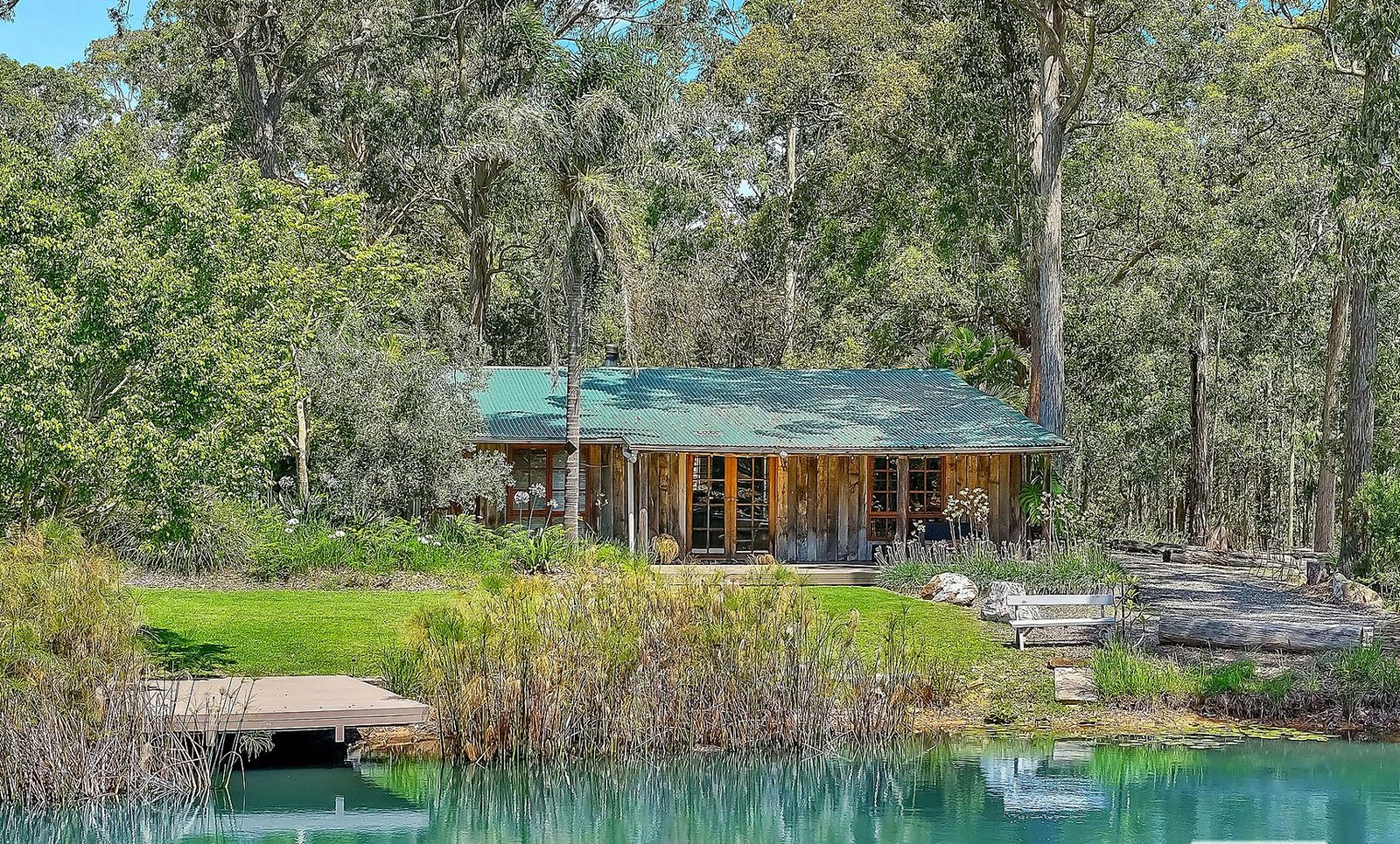
On the shore of the lake there is a place of petrified wood — trees turned to stone. The Awabakal name Threlkeld recorded is Kurra-kurran, and the explanation was precise: it had formerly been one great rock which fell from the heavens, and an immense iguana came down from the sky in anger. The reason for the anger — a quarrel over the killing of lice — is the kind of detail that only survives if someone was listening carefully, and only gets written down by someone who did not think it was beneath him.
The island and the thing beneath it
The island in the middle of the lake is Pulbah to the colony. The Awabakal word Threlkeld gives is Bulba, which he glosses as an island; any place surrounded with water. The water beside it, his informants said, was bottomless, and in it lived a creature much larger than a shark, which overturned canoes and swallowed the people in them. Later retellings name the creature Wauwai. Anyone who has been on the lake off the island in a southerly will not find this hard to believe. The story is told publicly today; it is theirs, and we point you to them.
Two women, two rocks
At the lake there are two rocks the Awabakal called Mullug-bula. They were, Threlkeld was told, two women who were transformed into stone. He records nothing else. Neither will we.
A grammar that genders the sky
Awabakal, like many languages, assigns gender. Threlkeld explains why the moon takes the masculine pronoun and the sun the feminine: the moon, his teachers said, had once been a man, named Pontobug; the sun had once been a woman. A story told around Belmont Lagoon today, and set in bronze on a memorial there, has the lagoon formed from the tears of the moon spirit. It is told by the Bahtabah community in their own words, and that is where you should hear it.
The kangaroo in the headland
The headland at the mouth of the Hunter — Nobbys — was, the Awabakal said, the home of an immensely large kangaroo. That story is retold publicly today by Awabakal and Worimi voices, and a version survives in the Haslam papers at the University of Newcastle. We mention it because it is public, and because it reminds you that every landmark you can see from the lake had a resident before it had a name on a chart.
The place of coals
Threlkeld’s list has Nikkinba, a place of coals, from nikkin, coal, and Mulubinba, the site of Newcastle, named for a fern. The Awabakal had a word for coal, and — according to a newspaper account from the 1990s — a story of how it was made, said to be the only Aboriginal tradition in the country that speaks of coal at all. The seam those words describe runs beneath this valley. Wyee Colliery sank its shaft into it in the 1960s, and the longwalls of the Mandalong mine follow it today. It was named before it was mapped, and explained before it was mined.
What the record does not say about here
What this asks of us
The stories on this page do not belong to a website. They belong to the people whose Country they describe, some of whom live twenty minutes from our gate, and we intend to put this page in front of them. Until they have responded, it is a careful reading of a public book, and the only thing we will add to it is their corrections.
More in Country