Journal · Country
Awaba: the language of a plain surface
The Awabakal language was written down in 1834 by a missionary and the man who taught him. Here is what that record says about the lake, the words, and the people who are speaking it again.
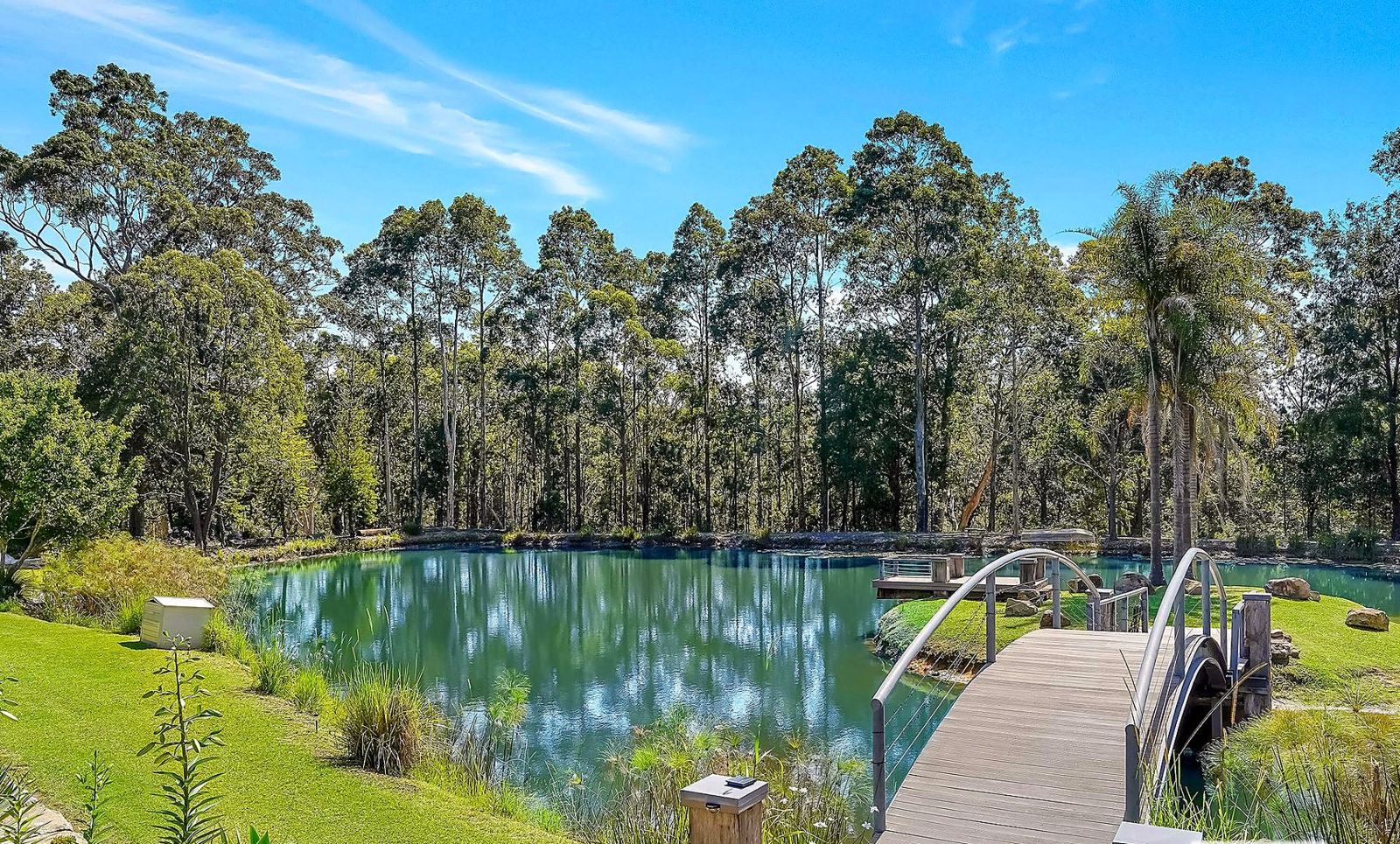
Every lake has two names: the one on the sign and the one it had first. The sign at the end of our road says Lake Macquarie, after a governor who never saw it. The older name is Awaba, and the people took their own name from it: the Awabakal, the people of Awaba. When the missionary Lancelot Threlkeld wrote the word down in 1834 he added its meaning — a plain surface — which is as good a description of this water on a still morning as anyone has managed since.
This piece is about that record: what was written down, who made it possible, what it says about the country we now live on, and who is speaking the language again today.
A grammar from the shore of the lake
In 1825 the London Missionary Society sent Threlkeld to the shore of Lake Macquarie. Ten thousand acres had been set aside at a place the colony called Reid’s Mistake, near what is now Belmont. He built a mission house there in 1826, moved to the western shore a few years later, and left in the early 1840s when the government withdrew its support.
The mission failed on its own terms: it made almost no converts. It succeeded at something it never set out to do. Threlkeld learned the language — properly, grammatically, with its cases and its dual number and its particles — and published it. An Australian Grammar came out in Sydney in 1834, and a longer Key to the Structure of the Aboriginal Language in 1850. In 1892 John Fraser gathered both, with Threlkeld’s vocabulary and a lexicon, into a single volume that is now in the public domain and readable online. It is the main reason anybody can say an Awabakal sentence today.
The man who taught him
Threlkeld could not have done it alone, and did not pretend to. His teacher was a senior Awabakal man the colony knew as M’Gill or Macgill, whose own name was Biraban — in his own language, We-pohng. Born on the eastern shore of the lake around the end of the 1790s, he had been taken as a boy to Sydney and later worked as a bush constable at Port Macquarie, which is how he came to speak English well enough to become the colony’s interpreter in court. In 1830 Governor Darling gave him a brass plate naming him chief of the tribe at Bartabah on Lake Macquarie.
From 1825 he was Threlkeld’s principal assistant. The Gospel of Luke that Threlkeld produced in Awabakal was, by the missionary’s own account, mostly Biraban’s translation. The scholar Anne Keary, who has read the whole correspondence, describes a genuine collaboration between two men who each wanted something from the other and neither of whom got quite what he wanted. That reading seems right to us.
Biraban died in Newcastle in the 1840s. The sources disagree on the year — the Australian Dictionary of Biography says around 1842, other records say 14 April 1846 — and we are not going to pick one. What is not in dispute is that without him there is no grammar, no lexicon, and no revival.
What the words say about the country
Threlkeld’s vocabulary is a window onto how this landscape was named by the people who lived on it. A few of the words, in his spellings, with his glosses:
| Awabakal (Threlkeld, 1834) | Meaning |
|---|---|
| Awaba | the lake; “a plain surface” |
| Bato, also Kokoin | water |
| Koiyug | fire — and, in a related form, a camp |
| Koiwon | rain |
| Punnal | the sun |
| Mulo | thunder |
| Korowa | the sea; the waves |
| Moroko | the sky, “the visible heavens” |
| Kulai | wood, timber, a tree of any kind |
| Purai | earth, land, the world |
| Bulba | an island; any place surrounded by water |
| Kau-ma, Boa-ma | gathered together |
Two of those stop us every time. The same root gives fire and camp: where there is a fire, there are people. And Awaba — the lake — is not a word for water at all. It is a word for flatness, for the calm plane of the surface. The people named the thing by what it looked like from the shore.
The place names Threlkeld recorded run the same way. Nikkinba, the place of coals, from nikkin, coal — the Awabakal had a word for the stuff a century before anyone sank a shaft at Wyee. Mulubinba, the site of Newcastle, from a fern that grew there. Niritiba, the island at the lake’s entrance, named for the mutton bird. Warawallug, a high mountain to the west of the lake, named for the human head. We live at the southern tip of all this, where the lake’s catchment climbs toward the Watagans; the hills Threlkeld’s informants were naming are the ones we see from the top paddock.
The language today
The grammar sat in libraries for a century. Then, in 2002, an Aboriginal organisation in Boolaroo — now Miromaa Aboriginal Language and Technology Centre, whose name means saved — began the work of bringing Awabakal back as a spoken language, building software, classes and a word list from Threlkeld’s record and from the knowledge still held in community. The Awabakal Language Program they run today accepts language and cultural requests from the public, and publishes its own protocols on Indigenous cultural and intellectual property.
We have written this page from the public-domain record and from published scholarship, and we have used the 1834 spellings so that nobody mistakes our transcriptions for the living language’s current forms. Before any Awabakal word goes on a sign, a menu or a wall at this property, it will go to Miromaa first. That is not a disclaimer. It is the order of operations.
Why this matters to a retreat
People come to places like this to slow down and pay attention. The oldest available model of paying attention to this particular ground is a language that named the lake for its stillness, the coal for its blackness, the island for its bird. We are not the custodians of that language. We are, at best, a place where people might hear a few words of it, said correctly, with the name of the man who kept it alive beside them.
If you are Awabakal and something on this page is wrong, incomplete, or not ours to say, please tell us. Corrections are recorded here with the date.
More in Country