
Journal · The settlers’ century
Timber, rails and a town: the settlers' century at Wyee
From a sawmill on the lake in 1874 to a railway town proclaimed in 1891, a mine in the 1960s and a longwall today: what the record says the settlers did with this valley.
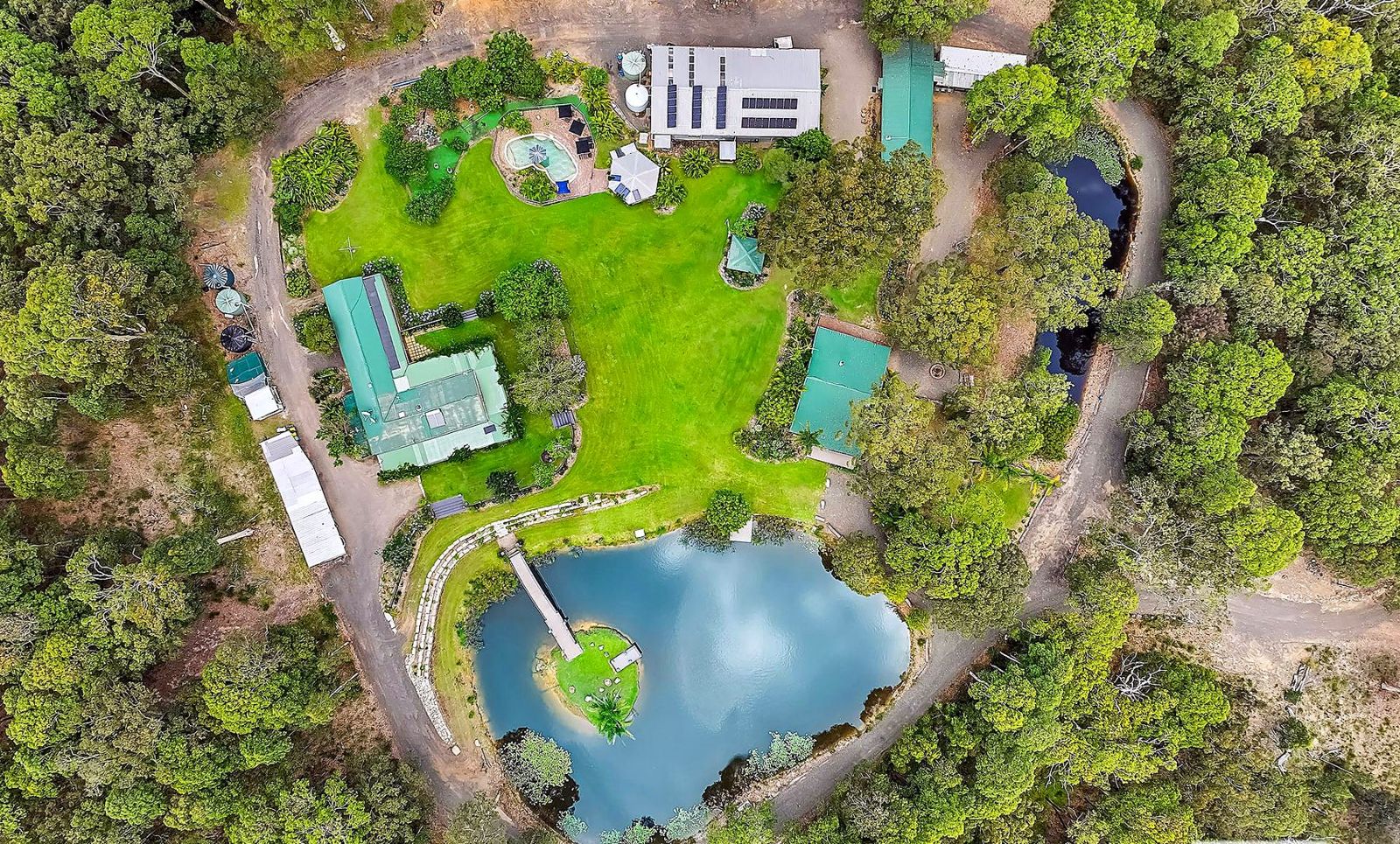
The settlers were late to this valley, and they came for the trees. That is the short version. The long version is in the newspapers of Newcastle and Maitland, in the council library’s local-history files, and in a street-name index that mentions, in passing, the family our road is named after. Here it is, with the gaps left visible.
Before the mill: grants on paper, nobody home
The first Europeans to own land here never lived on it. In 1839 Thomas Walker was granted 1,120 and 640 acres at Wyee and did not take up residence; Henry Osborne and the Walkers bought blocks at Mandalong between 1838 and 1840 and ran cattle from a distance. The valley was, to the colony, grazing country you sent stock into and rode out of.
The council’s history of Wyee says that for a long stretch the only residents were a family named Freeman — James and his son — who had moved onto a hut between Wyee Creek and Mannering Creek before 1860, holding no title at all. Granny Freeman’s obituary in the Sydney Morning Herald of February 1929 says she had lived there for sixty-nine years. The family details are tangled in the records and we will not untangle them here; the point is that for the first thirty years of “settlement”, settlement was one hut.
At Mandalong, a few kilometres up the valley, it was a little busier. Carl Solling bought his first block in 1852 and is counted the first permanent settler; the Bonnell and Kelly families came in 1861, Joseph and Eliza Frost in 1864 to raise horses and cattle, and the Kellys, Morans, Booths and Tobins before 1870. Most were Catholic and had a church up by 1876. A post office opened in 1884. Until 1882 the school spelled the place “Mandelong”. What the name means, nobody has recorded; the library’s own entry says name origin: unknown, and so do we.
The library also notes, in a single line, that an Aboriginal camp existed at Mandalong in the 1860s. It is the only such line in the settler record of this valley. We have written about what that silence means on a separate page.
1874: the mill at Wyee Point
In 1874 a large steam sawmill was built on the lake at Wyee Point, by a railway contractor from Murrurundi whose name the sources spell Wakefield and Wakeford in roughly equal measure. His business was sleepers: the Great Northern railway was pushing north toward Tamworth and needed hardwood under every rail. A man named Joseph Lancaster had the contract for 100,000 of them.
The 1875 and 1877 newspapers are specific in a way that is a gift to anyone who wants to picture it. Lancaster employed three horse teams and seven bullock teams to haul the logs out of the bush; the mill employed twenty-five men and was cutting about 40,000 feet of timber a week. A tramway of wooden sleepers and wooden rails ran a mile and a half from the mill to the wharf road, and a wharf reached out into the lake so the timber could go by water to Newcastle. The vessels that carried it were, one correspondent noted, all built of spotted gum — the same tree that still dominates the ridges above our house.
An advertisement in February 1888 placed the Wyee sawmill within two miles of the new railway station. The mill was sold, passed to a Frederick King, and was eventually destroyed by fire. Lancaster lived to eighty-seven. Nothing of the mill is visible at Wyee Point today.
The teams
The timber did not stop with the sleepers. In August 1903 a Sydney newspaperman touring Northumberland described the bullock teams of the valley — fourteen to eighteen beasts each — hauling piles, girders, sleepers, mine props and telegraph poles out of the Mandalong bush, and recorded that from Mandalong to Morisset the road was practically impassable. Twenty years earlier the Maitland Mercury had reported a fatal accident on the same road, describing Mandalong as being in the Brisbane Water district, about six miles from Cooranbong. The valley’s relationship with its roads has not fundamentally changed.
Sawmilling went on at Mandalong well into the twentieth century; the Newcastle Morning Herald of July 1953 reports an injured sawyer of Sauls Road. The species the record confirms are spotted gum and — from a book title at least — ironbark. She-oak shingles went out by ketch from Dora Creek. Turpentine and blackbutt are often said to have been cut here too; we have not found a document that says so, and so we do not say it either.
1887: the railway, and a town with the wrong name
The Great Northern railway from Sydney reached this valley in August 1887, and with it came a construction depot at Wyee and a camp of navvies. A Crown subdivision at Morisset was laid out as the line went through and proclaimed a township on 3 December 1887, named for James Thomas Morisset, commandant of Newcastle from 1818 to 1823. Dora Creek — until then called Newport — got a post office in September 1887 and an untended platform in 1889.
Wyee’s station is a small tangle. The library’s account says a station opened here in 1887 under the name Norahville — after the nearest coastal village, or, by another account, after the gold discoverer Edward Hargraves’ house; Hargraves held a waterfront block near Wyee — and was renamed Wyee in 1888, while the station up the line that had been called “Wyee” became Fassifern on 12 March 1888. The railway records themselves list Wyee station as opening on 1 August 1892, with a platform added in 1896. Both may be true of different structures. We give you the dates and the disagreement; a plaque would give you one date and be wrong half the time.
What is not in doubt is that the railway made the town. Wyee was proclaimed a town on 22 August 1891, and the street-name index records that the Toepfer family were original grantees in the Town of Wyee of that year. That one sentence is, so far, the whole of what we know about the people our road is named after. We have looked in the newspapers, the libraries and the indexes, and found nothing more. If you are a Toepfer, or know one, write to us; the next paragraph of this page is yours.
1909: the hospital on the ridge
In August 1900 the government gazetted 1,300 acres above Morisset for the purpose of an Asylum for the Insane, and in 1909 the hospital opened with seventy-eight men in its first ward. Later a maximum-security hospital was built at Wyee itself. For most of the twentieth century the hospital was the largest employer in the district and the reason many families came here. It is a large part of why Morisset is a town and Wyee is a village, and it sits, still, on the ridge between us and the lake.
Wyee Road replaced the old Maitland Road as the way between Morisset and Wyee in 1958–59, on a £20,000 grant.
1962: coal
The Awabakal had a word for coal before anyone dug it. The settlers took a century to get around to it. Wyee Colliery, state-owned, worked the seam from the early 1960s until 2002, and reopened in 2004–05 as Mannering Colliery under Centennial Coal, which also took over the old Cooranbong Colliery up the valley and renamed it Mandalong. Longwall mining at Mandalong began in 2005 and continues; the mine sits beside the motorway near Morisset, and its workings run under this part of the valley.
Over the years the valley’s residents have raised subsidence and mine water with the company’s consultative committee. The mine is part of what this valley is, and a history of the place would be incomplete without it.
1985 to now
The Sydney–Newcastle freeway cut through Mandalong in 1985 and the railway was electrified the year before; the valley became, for the first time, a place you could reach from Sydney in an hour and a half without planning your life around it. The retreat that gave this property its name was established in the years after that, and ran, under one name or another, into the 2020s. That story has its own page.
The library’s local-history files are the backbone of this piece and are freely searchable. Where newspapers disagree with the library, or with each other, we have said so rather than choose.