
Journal · How we treat the land
Caring for the bush: weeds, corridors and gliders
Seventy-seven acres of protected forest does not look after itself once people arrive. Here is the practical, sourced plan: what grows here, what should not, and how we intend to leave the bush better than we found it.
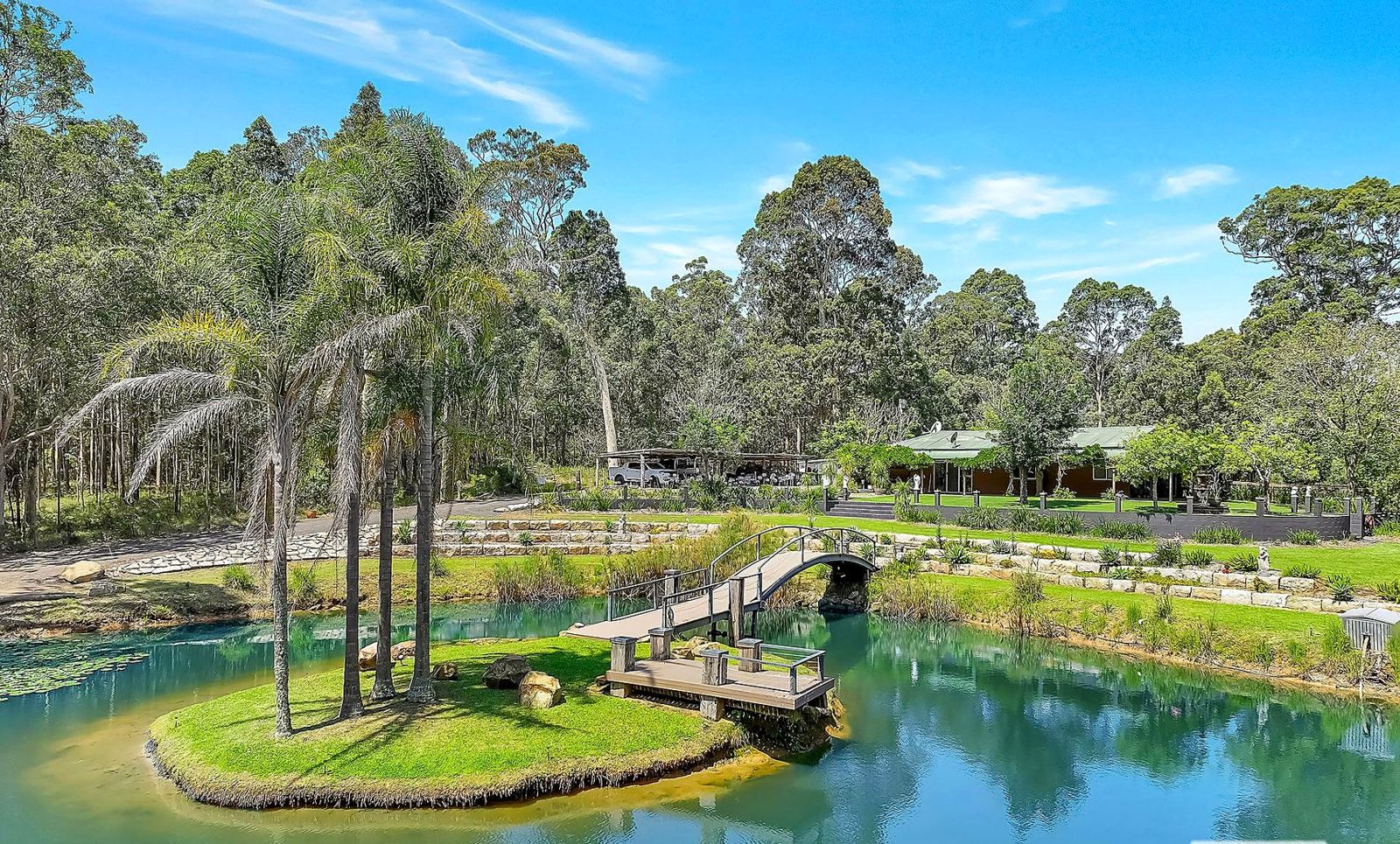
The zoning here has a purpose written into it: to protect, manage and restore areas of high ecological, scientific, cultural or aesthetic value, and to conserve the corridors that let species move. We did not write that. The state did, and it is the best one-paragraph brief a landholder could be handed. This page is how we intend to follow it.
What grows here
The ridges above the house carry the forest this part of the lake is known for: spotted gum and ironbark, tall and open, with a grassy understorey where the fire has been kind and a scrubby one where it has not. Across the lower Hunter that community has been listed by the state as endangered — the Lower Hunter Spotted Gum Ironbark Forest — because so much of it has gone under houses and mines. Whether the stands on our ridges fall inside that listing is a question for a botanist with the state’s vegetation maps, and we have not had that survey done. We are not going to claim an endangered ecological community on a brochure without it. We are going to find out.
Lower down, toward the dams, the forest changes: paperbarks and she-oaks at the water, palms and ferns planted around the water, and the garden around the house. The lake itself, a few kilometres downstream, is habitat for threatened species including the swift parrot, which winters in flowering eucalypts along this coast. We have not seen one here. We would like to.
What should not
Three weeds define bush regeneration in this district, and all three are here in places.
Lantana is a Weed of National Significance, and the standard advice is the advice we follow: work in sections from the edges of the good bush inward; treat seedlings before they reach a metre; expect regrowth within one to three months and come back for it; never rely on slashing alone, which just makes it angry. Privet, the big-tree and the small-leaf kind, is handled by drilling and injecting the large fruiting trees and cutting and painting the small ones. Crofton weed, which poisons horses and loves our damp gullies, now has a biological control — a rust fungus released by the state in 2015 — and we will let that do the landscape-scale work while we hand-pull around the dams.
The method underneath all of it is the one two sisters worked out in the Sydney bush sixty years ago and the regenerators’ association still teaches: secure the best areas first; do not overclear; let the bush set the pace, so that native regeneration fills each gap before you open the next one. It is slower than a bulldozer. It is also the only approach that works on land you intend to still be bush in fifty years.
Corridors and hollows
The animals people most want to see here are the ones that need the trees most. Squirrel gliders — a threatened species in this state — are recorded around the lake at Valentine, Eleebana, Morisset and Wyee, which is to say in our forest or next door to it. Gliders need two things: continuous canopy to move through, and tree hollows to sleep in, and a hollow takes a eucalypt a century or more to form. That is the practical reason behind our rule about not removing trees. Where hollows are scarce we will put up nest boxes, which help; they do not replace the real thing, and we will not pretend they do.
The corridor the zoning talks about runs through this property: from the Watagans to the west, down the creek lines, to the lake. Keeping it means keeping the bush between the dams and the ridge unbroken, keeping dogs on leads or at home, and keeping the night dark — fixed outdoor lighting is one of the quietest ways to break a corridor, and we are keeping it to a minimum.
The road
Four kilometres of unsealed road is also four kilometres of potential erosion into the creek. The state’s guidance on unsealed roads is unglamorous and correct: a crowned surface with a four to six per cent crossfall so water sheds instead of channelling; table drains along the sides and mitre drains leading off them; cut-off drains well before any stream crossing. We will maintain the road to that standard, and no further than that standard, because the road also crosses country with recorded heritage sites nearby, and nothing is graded until the heritage work on another page of this journal is complete.
Putting it in writing
There is a way to make a promise like this outlast us. The state’s Biodiversity Conservation Trust offers agreements that attach to the land title: a wildlife refuge, which the landholder can revoke, and a conservation agreement, which is in perpetuity and binds every future owner. Separately, the community-run Land for Wildlife scheme registers properties that manage habitat, at no cost and with no binding. We are looking at all three. Our instinct is toward the one that cannot be undone, because custodianship that depends on the current custodian is just ownership with better manners.
What this is not
This page is not a claim that the bush is pristine, that we have surveyed it, or that we are already doing all of the above. We have begun. Most of the weeds are still standing. The survey is not booked. The agreement is not signed. This page will be updated as each part of the plan is carried out.